
Before You List, Read This: What to Update, What to Skip, and What Actually Sells a Home
Not every renovation earns its keep at resale. This no-fluff guide breaks down the updates worth every dollar and the ones smart sellers skip entirely.
Somewhere between the third hardware store run and the second contractor quote, most homeowners selling their home realize they have already spent money in all the wrong places. It is one of the most common and costly mistakes in residential real estate: pouring renovation dollars into upgrades that feel impressive but do not move the needle on what buyers actually pay for. The gap between what sellers think adds value and what actually shows up on a closing statement is wider than most people expect, and closing that gap before you list is the difference between walking away with a profit and barely breaking even.
According to Zillow, roughly 65 percent of sellers who sold a home in the past two years took on at least two home improvement projects before listing, yet a significant portion of those sellers admitted they did not research return on investment before starting work. That means the majority of renovation spending in the pre-sale phase is guided by gut feeling rather than data. This article is built on that data. Whether you are preparing to sell within the next few months or thinking a year or two ahead, the framework here will help you spend smarter, skip confidently, and walk into the market with your equity intact.
First Impressions Are a Financial Decision, Not Just an Aesthetic One
The exterior of a home does something no interior upgrade can fully replicate: it sets the buyer's emotional tone before they ever step inside. A buyer who pulls up to a home and feels impressed is already inclined toward a higher offer. A buyer who spots peeling paint, a dated garage door, or a cracked front path arrives skeptical, and skeptical buyers negotiate harder. Curb appeal is not decoration; it is positioning.
Garage Door Replacement
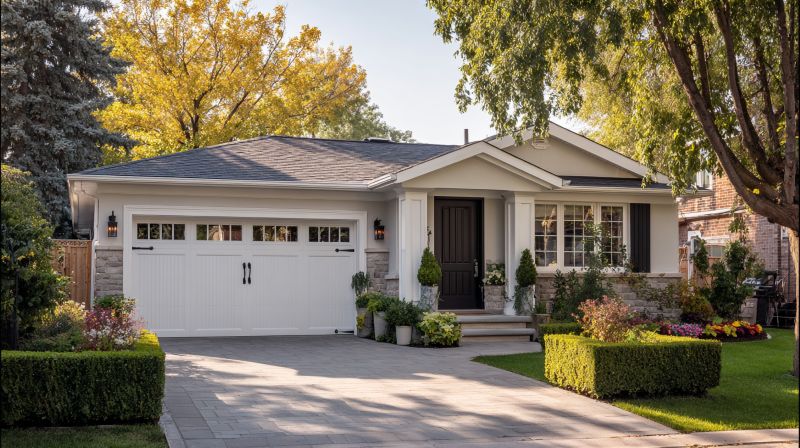
Few renovations in residential real estate return more than the cost invested, but garage door replacement comes close. According to the Remodeling Cost vs. Value Report, a standard garage door replacement returns nearly 194 percent of the project cost on average nationally. The math is straightforward: the work costs roughly $4,500 in most markets and adds close to $8,700 in resale value. For a single weekend's disruption and a relatively modest check, homeowners get one of the highest-performing investments available in pre-sale prep.
The reason it works is psychological as much as financial. A garage door covers a significant percentage of a home's front-facing square footage. When it looks outdated or tired, the entire facade suffers. A clean, modern replacement in a neutral finish with insulated panels and updated hardware immediately lifts the overall impression of the property without requiring structural changes or permits in most jurisdictions.
Entry Door Upgrades
Steel entry doors rank second in ROI among all renovation projects tracked by the Cost vs. Value Report, returning close to 188 percent of project costs. Beyond the numbers, an entry door upgrade addresses something buyers feel intuitively: security, insulation, and the sense that the home has been cared for. A solid, well-fitted door with updated hardware signals quality in a way that buyers absorb before they consciously register it.
The door does not need to be extravagant to perform well. Mid-range steel units with a clean finish and a half-glass panel consistently outperform ornate custom doors in resale ROI because they appeal to the broadest range of buyers rather than a narrow aesthetic preference.
Manufactured Stone Veneer
Adding manufactured stone veneer to the lower section of a home's exterior returns an average of 153 percent of project cost and transforms a flat or dated facade into something that reads as substantial and custom. It pairs well with neutral paint and modern garage door choices, creating a cohesive exterior story that photographs well and holds up to buyer scrutiny in person. Unlike painting or landscaping, stone veneer is perceived as a permanent and structural improvement, which tends to register more favorably in appraisal and buyer psychology alike.
Kitchen and Bathroom Updates: The Fine Line Between Smart and Overbuilt
No rooms carry more weight in a buyer's decision than the kitchen and the primary bathroom. Buyers walk into these spaces and make rapid judgments about whether the home feels move-in ready or whether they are inheriting someone else's deferred taste. The trap that catches most sellers is confusing "impressive" with "valuable." A $90,000 luxury kitchen remodel in a neighborhood where homes sell for $350,000 will not return its cost. A $15,000 targeted refresh almost certainly will.
What Actually Works in the Kitchen
- Replace cabinet fronts rather than full cabinet boxes when the structural elements are sound
- Swap old countertops for quartz or a solid-surface alternative in a neutral finish
- Install a new mid-priced faucet and sink
- Update hardware across all cabinets and drawers
- Replace the refrigerator and dishwasher with energy-efficient models
- Repaint walls in a warm, current neutral
- Regrout or replace the backsplash tile with a simple, timeless pattern
A minor kitchen remodel built around these elements typically returns 96 percent of its cost at resale, according to industry data. The goal is not to redesign the kitchen but to make it feel fresh, clean, and free of personality-specific decisions that might alienate buyers.
What Works in the Bathroom
Bathroom ROI follows a similar logic. A full gut-and-rebuild of a primary bathroom in a mid-range home typically returns somewhere between 60 and 70 percent of costs, which means overspending is easy and common. The smarter play is a targeted midrange update: new vanity lighting, a refinished or replaced vanity top, updated plumbing fixtures, fresh grout, and a clean coat of paint. In bathrooms where the bones are good, a few thousand dollars of targeted work reads as a full renovation to most buyers.
Where sellers consistently over-invest is in tile. Full floor-to-ceiling custom tile work is expensive, time-consuming, and rarely recoups proportionally because buyers discount anything that feels like a specific design statement rather than a neutral canvas.
A Contractor's Read on Prioritizing Pre-Sale Work
The question of which project to start with matters just as much as which projects to choose. Homeowners who approach pre-sale renovation as a list to check off rather than a sequence to manage often create scheduling conflicts, budget overruns, and finish conflicts that undermine the overall impression. The order of operations in renovation work is not arbitrary, and getting it wrong creates rework.
Chris Rivera, a renovation consultant who has worked with sellers across multiple markets, puts it plainly: "The sellers who net the most from their renovations are the ones who let the buyer's eye tell them where to spend, not their own preferences. They walk through the house and ask what a stranger would notice first, not what bothers them personally."
Rivera advises clients through We Buy Houses Arizona, a firm that has built a strong standing in the real estate industry for their practical, seller-focused approach to navigating home sales in all conditions. For homeowners who want a contractor's real-world take on sequencing and prioritization, this guide on renovations that boost resale value offers a grounded, project-by-project perspective worth reading before finalizing a pre-sale plan. It approaches the question from the contractor side rather than the real estate agent side, which tends to produce more useful guidance on what work actually looks like in practice.

The Upgrades That Feel Bold but Rarely Pay Back
Some renovations are genuinely enjoyable to live in but become financial liabilities when it is time to sell. Understanding which upgrades fall into this category is not pessimistic; it is practical. Every dollar spent on a low-ROI project is a dollar that could have gone toward something that actually accelerates a sale or increases an offer.
Swimming pools are among the most discussed and most misunderstood renovation decisions in residential real estate. In certain markets and climates, a pool adds genuine value. In others, it narrows the buyer pool significantly because buyers without children or buyers who see it as a maintenance burden actively filter pool homes out of their search. The installation cost for an in-ground pool averages between $35,000 and $65,000 depending on size and materials. The return at resale is highly market-dependent and often does not exceed 50 percent of costs even in favorable conditions.
Primary suite additions present a similar picture. The Cost vs. Value Report consistently ranks primary suite additions among the lowest-returning renovation categories, with upscale additions returning as little as 24 percent of costs and midrange versions rarely exceeding 36 percent. These are massive projects with long timelines, significant carrying costs, and returns that rarely justify the spend for sellers unless the addition addresses a genuine structural deficit in the home's floor plan relative to the market.
Luxury finish upgrades in kitchens and bathrooms follow the same pattern. Marble countertops, professional-grade appliances, and custom cabinetry in a home priced below the luxury threshold are classic examples of over-improving for the neighborhood. Buyers in mid-range markets expect a certain standard and will not pay significantly above it regardless of how high-end the individual finishes are. Meeting buyer expectations in your price range is the goal, not exceeding them.
Maintenance and Condition: The Part Sellers Keep Underestimating
Before any renovation conversation begins, there is a more fundamental category of work that almost always returns more than its cost: fixing what is broken. A fresh coat of exterior paint on a home with cracked trim does not help much if the roof has missing shingles or the HVAC system is visibly aging. Buyers and their inspectors are thorough, and deferred maintenance discovered during inspection leads to negotiated credits that typically exceed what the repairs would have cost.
- Address any visible water damage or staining on ceilings and walls
- Replace worn or damaged roofing materials
- Service or replace HVAC systems that are past their useful life
- Fix all broken fixtures, doors that do not close properly, and hardware that sticks
- Ensure all plumbing runs clean with no dripping fixtures or slow drains
- Clean and seal driveways, walkways, and concrete surfaces
- Power wash siding, fences, and hardscaping
A well-maintained home sells for approximately 10 percent more than a comparable home in average condition, according to research conducted through Thumbtack and shared by Zillow. Buyers are making the largest financial commitment of their lives and they are acutely sensitive to evidence that a home has been ignored. Condition signals care, and care signals value in a way that no renovation can manufacture.
The Clearest Path to a Stronger Sale Starts Well Before the Listing
Renovation decisions made in the weeks before a listing photograph is taken are almost always more expensive and less effective than the same decisions made three to six months out. Sellers who plan ahead have time to get multiple contractor quotes, avoid rush premiums, and sequence work so each project builds on the last rather than conflicting with it. The homes that sell fastest and closest to asking price in any market are almost never the ones with the most impressive renovations; they are the ones that feel complete, maintained, and move-in ready without demanding that the buyer use their imagination.
The framework is not complicated: fix what is broken first, upgrade what is visible second, and resist the urge to personalize or over-improve. Exterior upgrades tend to outperform interior renovations in raw ROI. In the kitchen and bathroom, modest and neutral consistently beats bold and custom. Pools, luxury additions, and high-end finishes in mid-market homes are emotional decisions dressed up as investment strategies. And at Miami New Home Construction, we see firsthand how the homes buyers want most are the ones where every dollar spent served the buyer's imagination rather than the seller's taste.