
Why Electricity Closes Out the Fatal Four
Wet cords, low power lines, and "dead" wires that aren't. How Miami home crews stop electrocution and finish the Fatal Four with one daily site walk.
In Part 2, we kept crews out of trenches and away from swinging loads. Those dangers are loud and easy to see. The last of OSHA's Fatal Four is the opposite. Electricity makes no noise, has no smell, and gives no warning before it hurts someone.
This series was shaped with insights from Mooshekh Law Firm, whose work with injured construction workers shows how often house-scale jobs get treated as "low risk." Their view helped us focus on the small, everyday choices that lead to the worst outcomes.
Miami adds its own twist. Our rainy season runs from about June into October, and late storms still roll in this time of year. Water turns a minor wiring flaw into a deadly one. A cord that is safe at 9 a.m. can be a shock hazard by the 3 p.m. downpour.
Three Places the Current Hides
On home builds, electrical injuries tend to start in one of three spots:
- Overhead lines running along the street or across the back lot
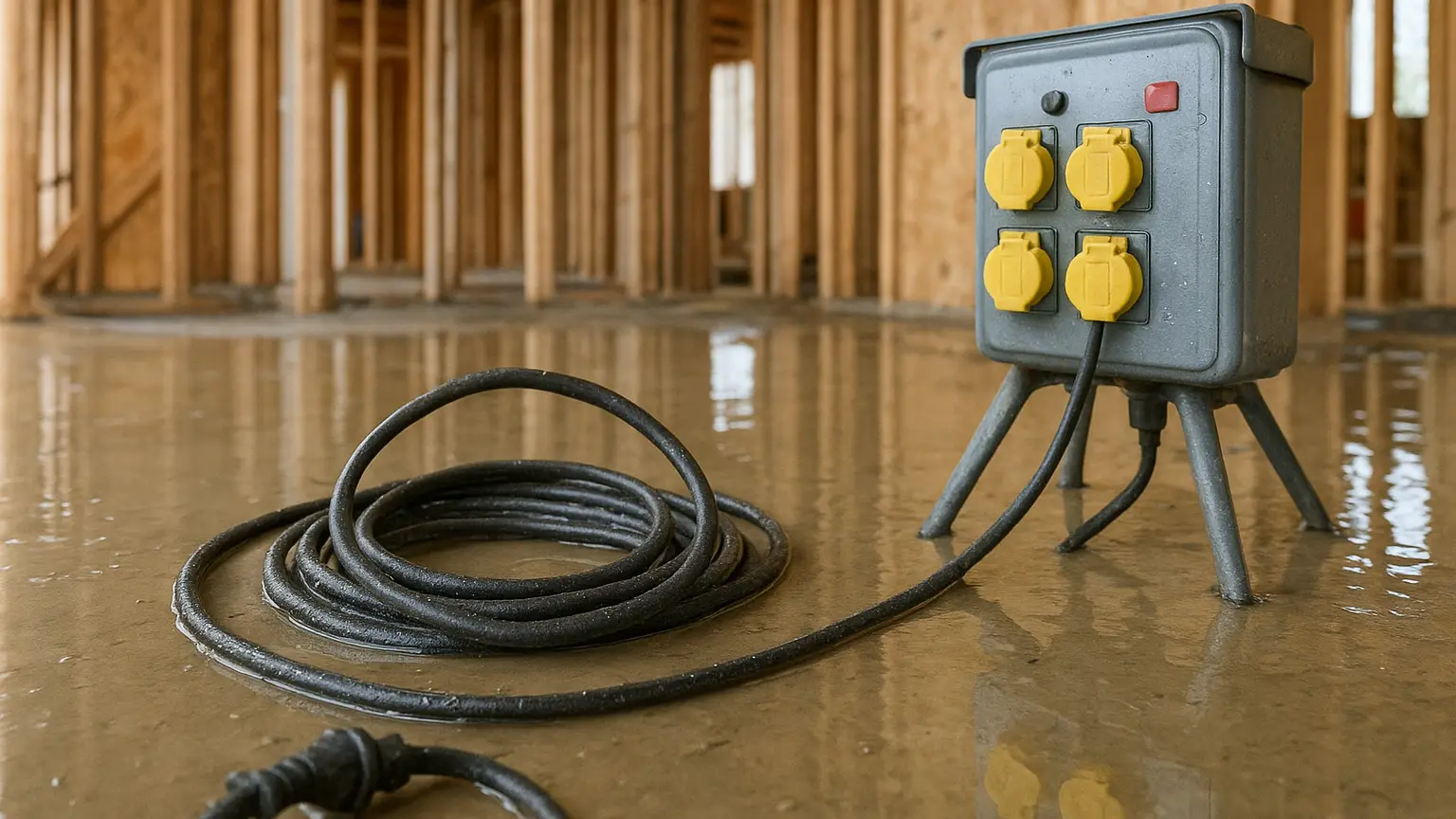
- Temporary power like cords, panels, and generators sitting in puddles
- Live wiring in remodels that someone believed was turned off
Each one needs its own plan. Let's walk through them.
Booms, Ladders, and the Line Overhead
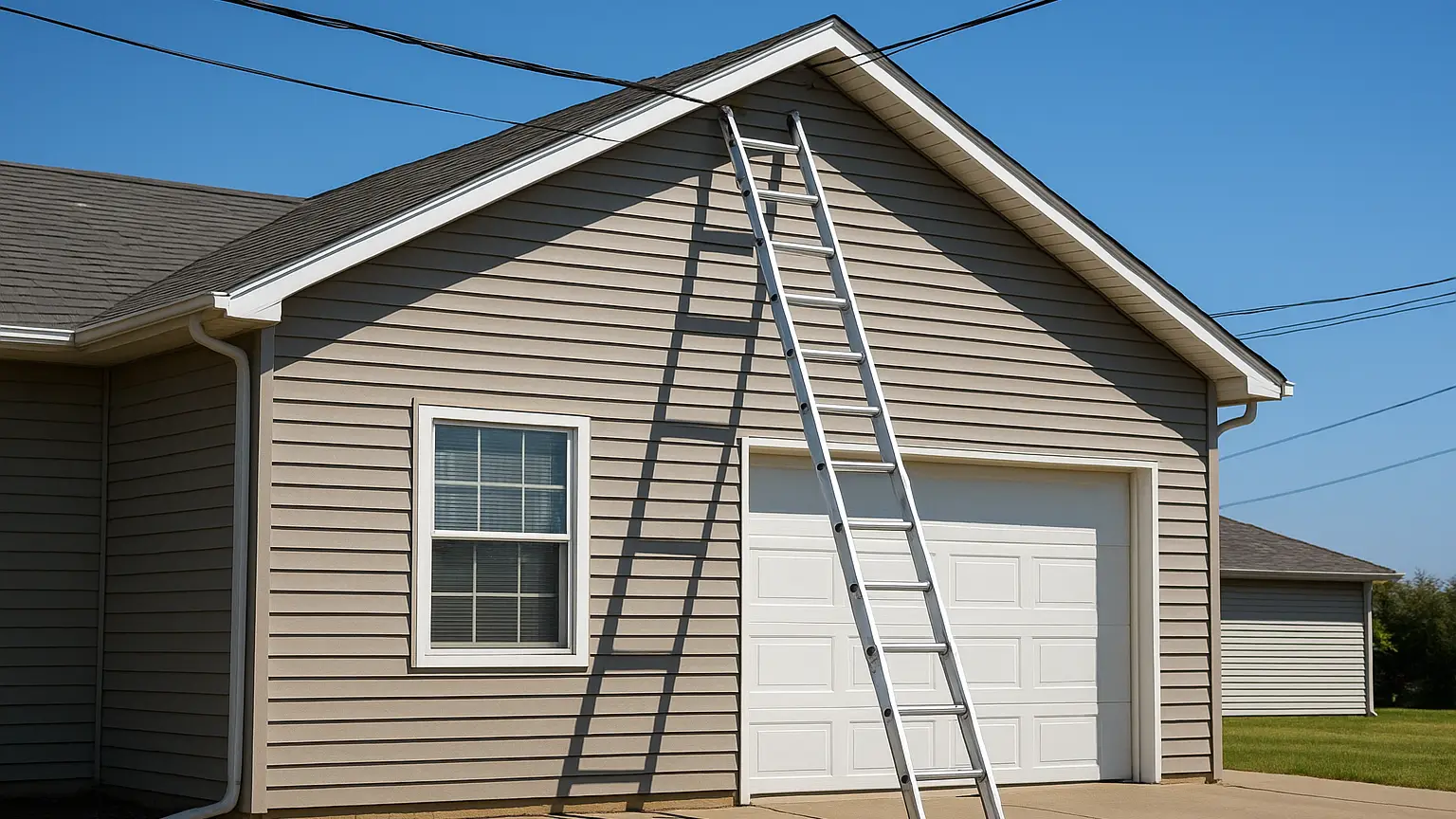
Many Miami lots sit tight against utility poles. Lines cross over driveways and side yards. That is right where a pump truck, lift, or long aluminum ladder ends up working.
Here is the key fact. You do not have to touch a power line to get hurt. Current can jump, or "arc," across open air to a boom or ladder that gets too close. OSHA's basic rule is to stay at least 10 feet away from typical lines, and farther for higher voltage. Many crews mark that zone on the ground with cones or flagging before any tall equipment shows up.
Ladder setup matters too. Carry ladders flat, not upright, and use fiberglass near any wiring. The same care that keeps a worker from falling, which we covered in the roof and ladder piece, also keeps a ladder from tipping into a line. If you can't keep a safe gap, call the utility. They can shut down or cover the line for you.
Temporary Power in a Wet Climate
Temporary power is the backbone of any build. It is also where rain does the most damage. Common problems we see on Miami sites include:
- Cords running through standing water or across drive paths
- Missing ground prongs that were snapped off "to make it fit"
- Outlets with no GFCI protection, which OSHA requires on job sites
- Generators running in garages or under tarps in a storm
- Panels left open with no cover after the electrician leaves
The fixes are cheap. Hang cords on hooks or stands, not on the ground. Test GFCIs every morning by pressing the button. Toss any cord with cuts or tape patches. Keep generators outside and dry.
Good planning early also helps later trades. A home built solar-ready from the start usually has a cleaner, better-labeled electrical layout, which makes every crew's job safer.
"Electrical injuries on house jobs rarely come from one big mistake. They come from a frayed cord nobody replaced and a puddle nobody moved," says Daniel Reyes, senior case manager at Mooshekh Law Firm.
The Remodel Wiring Trap
Remodels hide some of the riskiest wiring of all. Older Miami homes often have mislabeled breakers, add-on circuits, and DIY repairs behind the drywall. A worker flips the breaker marked "kitchen," cuts into a wall, and hits a wire fed from a different panel.
The rule is simple: test before you touch. Use a non-contact voltage tester, then confirm with a meter. Lock and tag the breaker so nobody flips it back on. If the house has two panels, check both.
New builds can avoid this mess later. Crews that pre-wire for future upgrades and label every circuit leave a much safer home for the next person who opens a wall.
One Morning Walk That Covers All Four Hazards
You don't need four separate safety programs. You need one walk, done every day before work starts. Here is a version that ties the whole series together:
- Falls: Are floor edges, stair openings, and roof edges guarded? Are ladders tied off and on firm ground?
- Struck-by: Are materials stacked low and secured? Is the equipment path clear of people?
- Caught-in: Are trenches shored or sloped, with no water pooling in them? This ties straight back to trench and pinch point safety.
- Electrical: Are cords off the ground? Do the GFCIs trip when tested? Is the power line zone marked?
- Weather: Is rain coming? If so, who shuts off power and covers panels?
Ten minutes. One clipboard. That habit catches most of what goes wrong on a house job, because the same lessons from the legal side of these cases keep showing up: injuries follow skipped basics, not rare freak accidents.
"When we review a residential injury, the missing piece is almost never exotic. It's a GFCI nobody tested or a ladder nobody checked that morning," says Priya Natarajan, trial attorney at Mooshekh Law Firm.
Small Jobs, Full Respect
Across this series, we looked at the Fatal Four through a residential lens. Falls from short roofs and open stairwells. Materials and machines that strike or pin workers. Sandy Miami trenches that collapse without warning. And now electricity, the quiet hazard that rain makes far worse.
The thread running through all of it is respect. A single-family home is not a "small" job when it comes to risk. Give every lot the same care you would give a tower, walk the site each morning, and treat every wire as live until proven otherwise. Do that, and your crew goes home the same way they arrived.