
Why the Last Week Shapes the Next Decade
A gate that works on closing day can fail by spring. Here is the commissioning, training, and upkeep plan that keeps it opening smoothly for years in Miami.
Everything Hinges on the Gate: The Complete Series: part 4 of 4.
In Part 3 we covered the safety rules automated gates must meet before anyone touches the button. This final part picks up where compliance leaves off: the moment the builder walks away and the owner is left holding a remote they barely understand.
This series was shaped by the field experience of American Fence, whose work on perimeter systems kept pointing to one pattern. Gates rarely fail because of bad parts. They fail because nobody tested them properly at handover, nobody showed the owner how they work, and nobody wrote down what comes next.
A typical closing goes like this. The punch list is long, the painter is touching up trim, the gate opens once while the buyer watches, and everyone calls it done. Six months later, a sensor is caked in salt, the battery backup is dead, and the manual release key is lost in a junk drawer.
That is a handover problem, not a hardware problem. It is cheap to fix while the crew is still on site and costly once they are gone. The fix comes in three parts:
- Commissioning that proves the gate works under real conditions
- Owner training that sticks after the builder leaves
- A maintenance schedule written for Miami heat, salt, and storms
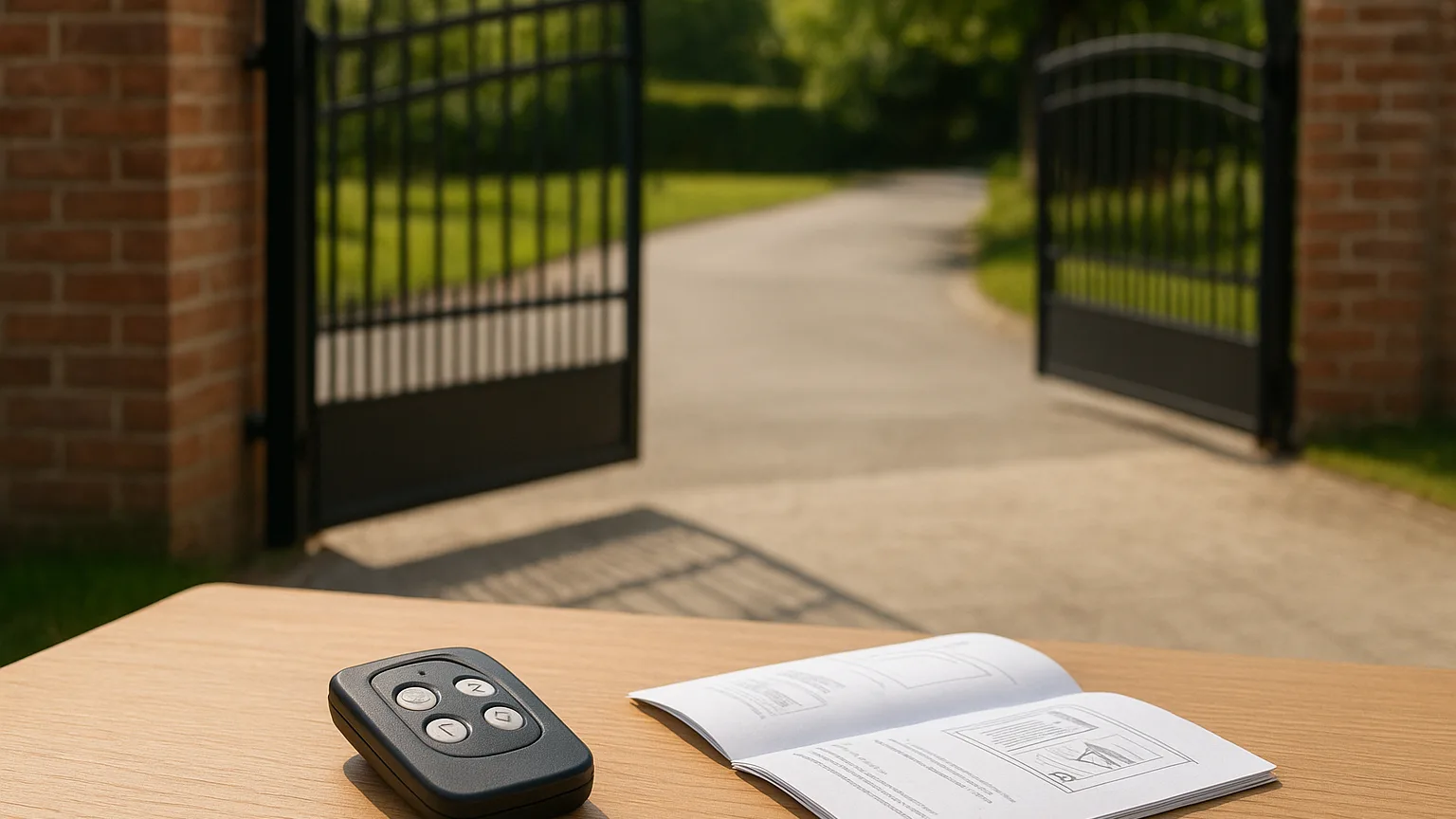
The Commissioning Walk, One Test at a Time
Commissioning is not a quick open and close. It is a slow walk through every way the gate can move, stop, and reverse, with the installer, the builder, and ideally the owner present. A solid walk covers these checks:
- Run the gate through ten full cycles and listen for grinding or hesitation
- Block each photo eye and edge sensor to confirm the gate stops and reverses
- Cut main power to test the battery backup and the manual release
- Confirm every remote, keypad code, and intercom works from the street
- Check hinge, roller, and track alignment after the gate has settled
Each test ties back to the UL 325 safety rules that govern entrapment protection. Passing an inspection months ago means little if a landscaping crew knocked a sensor out of line last week.
Record every result on a dated sheet. That sheet becomes the baseline, so when something feels off in year three, the owner knows what normal looked like.
The Handover Binder Owners Actually Use
Most owners never open the pile of paper manuals they receive. Give them a short, gate-only binder or shared folder instead, holding the operator model and serial number, an as-built wiring diagram, sensor locations, warranty terms, and the installer's direct phone line.
Good wiring records matter more than people expect. Builders who plan low-voltage runs early, the same idea behind pre-wire now, profit later, save owners from tearing up pavers just to trace a loop detector.
Training That Survives the First Emergency
Train the owner at the gate, not in the sales office. Have them open the gate by hand with the release key, reset the operator after a power loss, and learn which sensors to wipe and which settings never to touch. Fifteen minutes of hands-on practice beats a forty-page manual.
If a property manager or HOA will run the gate, train them too. The person who calls for service is often not the person who bought the home.
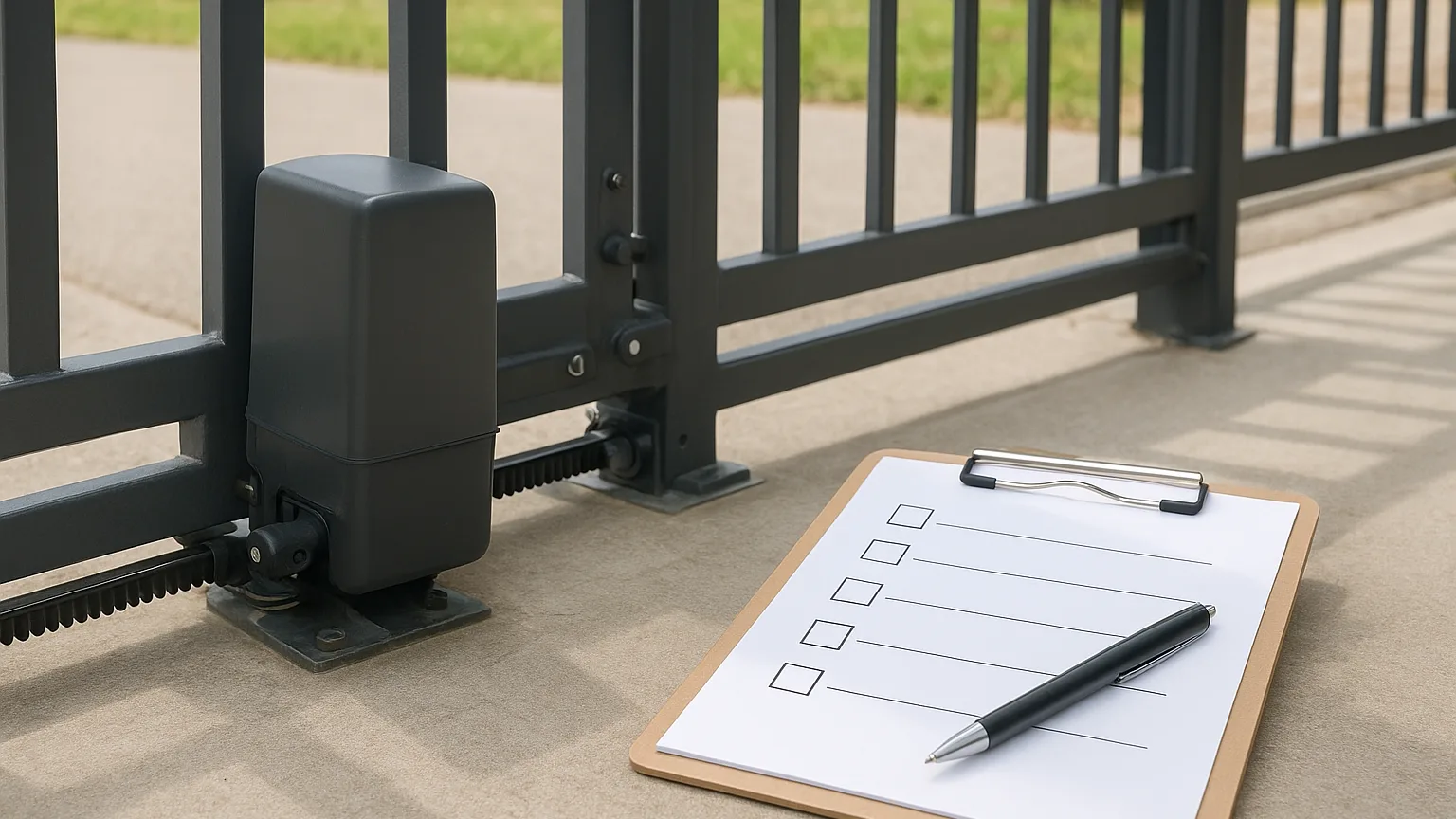
A Maintenance Calendar Built for South Florida
A gate in Ohio and a gate in Miami do not age the same way. Salt air eats hinges, afternoon storms soak control boxes, and summer sun cooks rubber edges until they crack. The schedule has to match the climate.
Every Month
Wipe the photo eyes clean, clear leaves, sand, and debris from tracks and rollers, and run the gate once on the backup battery alone to confirm it still holds a charge.
Every Quarter
Rinse salt off hinges and hardware with fresh water, then apply a light coat of lubricant. Check that safety edges still reverse the gate on contact, and look inside the control box for ants, moisture, or corroded terminals. The lessons from before rainy season soaks a jobsite apply equally to a gate operator sitting in a low spot near the driveway.
Every Year
Book a licensed technician to test the force settings, replace worn rollers, update firmware if the operator supports it, and compare results to the original commissioning sheet. Schedule it in early summer so the gate is ready before peak hurricane season.
When the Gate Guards More Than a Driveway
Condo towers, office campuses, and data facilities often tie gates into access control, cameras, and alarm panels, where one failed relay can lock out residents or leave the perimeter wide open. Insights from American Fence point toward layered planning, with the gate as one part of a bigger system. Their overview of high security perimeter options shows why crash-rated barriers and controlled entry points need service contracts, not just good intentions.
Assign one named person to own the gate, keep the binder, book the yearly visit, and track repairs. Without a clear owner, maintenance becomes everyone's job and nobody's habit.
From First Truck to Final Click
This series followed the gate from the first day of construction, starting with jobsite entrance placement and moving through headcounts, badge gates, and the safety standards that keep automated gates from hurting people. Each stage showed the same truth: the gate is the busiest moving part on a property, and small choices made early ripple out for years.
Handover is where all that work pays off or slips away. Test the gate honestly, train the people who will live with it, and leave behind a schedule tuned to Miami salt, sun, and storms. Do those three things, and the gate that opened smoothly on closing day will still swing open without a fight in year five and well beyond.