
Why Real Wood Slats Lose the Miami Fight
Real wood blinds swell, mold, and fade fast in Miami air. See which slat materials survive humidity and the right week to order them during your build.
Your new home is sealed, cooled, and brand new. The blinds you pick in the design center may still be rotting from the inside out by your third summer. Here is the one material choice that fails most often, what to buy instead, and the exact moment in your build to place the order.
Most buyers in South Florida make the same choice. Much like a gate mistake on day one, it feels harmless at move in and costs more each year after. They pick real wood blinds because they look warm and rich in the showroom. The showroom is dry and cool. Your home is not, at least not all the time.
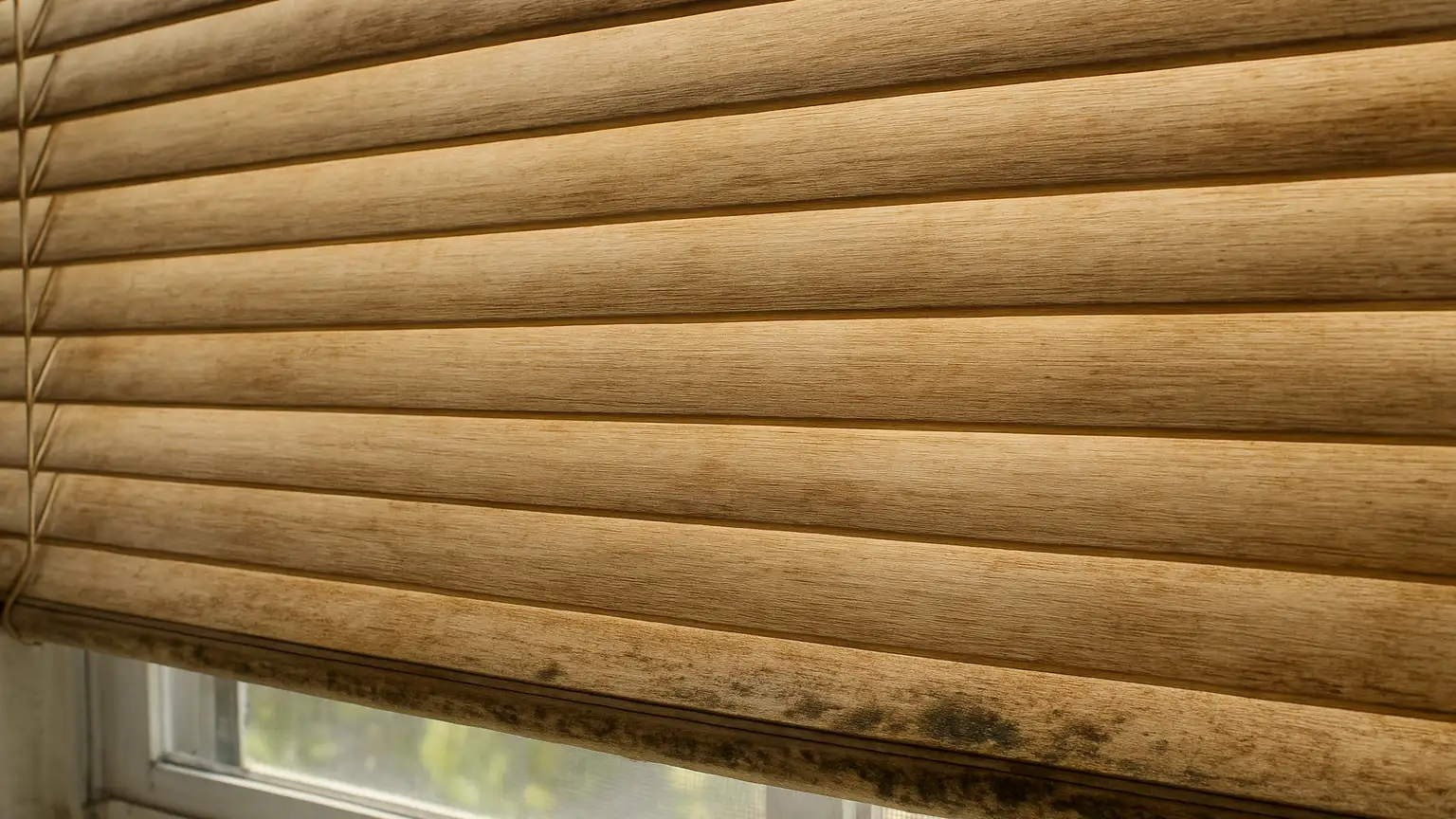
Wood is a sponge. It pulls water out of the air and swells. When the AC kicks on, it dries and shrinks. In Miami, that cycle can happen every single day. After a few hundred cycles, slats start to bow. The paint or stain cracks at the edges. Moisture gets into those cracks, and that is where mold begins.
New homes make this worse in a way most people never hear about. Fresh concrete, drywall mud, paint, and grout all release water for months after you move in. A new house can stay damp longer than an older one, even with the AC running hard.
A Three Season Failure Timeline
Here is what owners in Miami-Dade and Broward often report with real wood blinds in sunny or humid rooms:
- Season one: Slats look fine but feel a little stiff to tilt. The cords may start to fray at the top rail.
- Season two: Slats near the window glass begin to curve. Gaps show when the blinds are closed. Small dark dots appear on the back side in bathrooms and laundry rooms.
- Season three: The sun side has faded to a lighter shade than the room side. Warped slats will not close flat. Mold spots spread along the bottom rail where water sits.
Fading is the part people do not expect. Miami sun is strong year round, and west facing windows take a beating every afternoon. Stain pigments break down fast under that light.
Some buyers skip blinds and go with drapes to avoid the problem. That can work in a living room, but fabric holds moisture too. If you are torn, comparing the pros and cons of blinds against curtains can help you decide room by room before you commit.
The good news is simple. You can get the same clean look without the warping. You just need the right material for each room.
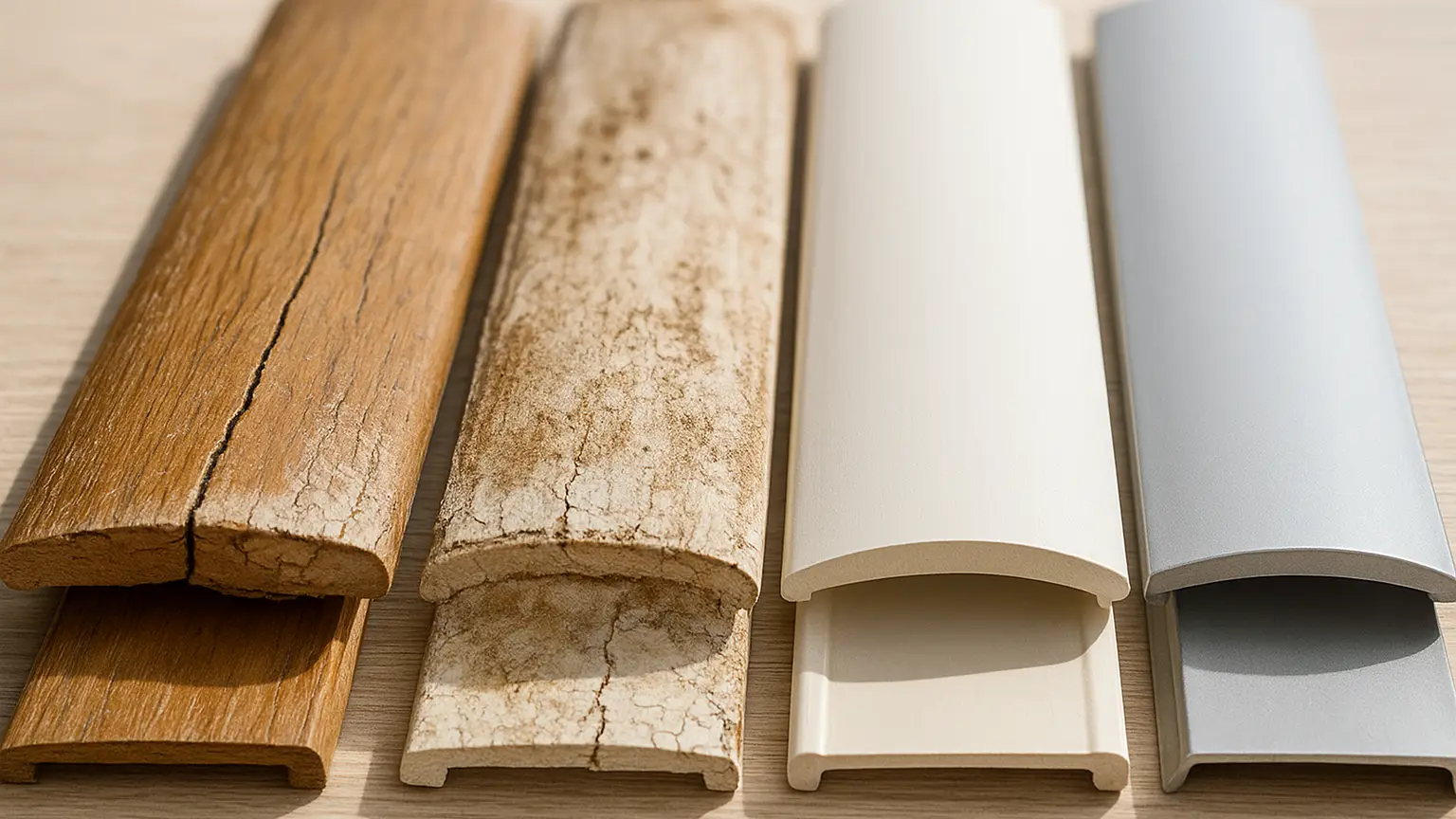
Not all synthetic blinds are equal. Some handle Miami well for ten years or more. Others sag in the heat almost as badly as wood swells in the damp. Here is how the main choices stack up.
How Each Material Handles Heat and Damp
Faux Wood
This is the top pick for most rooms in a new Miami home. Faux wood looks like painted wood but will not soak up water. There are two kinds, and the difference matters.
- Composite faux wood mixes wood fibers with resin. It is lighter and stays straight in heat. This is the one to ask for.
- Solid PVC faux wood is cheaper and heavier. On very hot windows, wide slats can droop in the middle over time.
Ask your builder or installer which one is in the package. A lot of standard options are solid PVC with a nice name on the label.
Aluminum
Aluminum mini blinds are the most moisture proof choice you can buy. They will not swell, warp, or grow mold. Look for powder coated slats, since bare or cheap finishes can pit near the coast. They are a smart fit for bathrooms, kitchens, and any room near the pool deck.
The tradeoff is looks and noise. Thin slats can dent, and they rattle when a fan or AC vent blows on them.
Vinyl
Basic vinyl blinds cost the least. They resist water, but they do not handle heat well. In direct sun they can yellow, turn brittle, and warp. Use them in a closet or garage, not a sunny bedroom.
Matching Materials to Rooms
A simple room by room plan keeps you out of trouble:
- Bathrooms and laundry: Aluminum or composite faux wood only.
- Kitchen: Faux wood or aluminum. Grease and steam both wipe off easily.
- West and south facing bedrooms: Composite faux wood with UV stable paint.
- Living rooms with sliders: Vertical blinds or panel tracks in synthetic fabric.
- Garage and storage: Vinyl is fine here.
Blinds That Play Nice With Storm Protection
Blinds do not protect your home from a storm. But they can get in the way of what does. This is the part of the plan most buyers forget until the first hurricane warning.
If your home has impact glass, the blinds sit inside with no conflict. If you plan to order impact windows before hurricane season or upgrade later, measure your blinds after the final window frames are set. Impact frames are often deeper than standard frames, and that changes how inside mount blinds fit.
Homes with accordion shutters, roll downs, or storm panels need a few extra checks:
- Make sure blind brackets do not block shutter tracks or locks.
- Leave room to reach window cranks and latches when blinds are down.
- Pick cordless or wand tilt styles so you are not tangled in cords during storm prep.
Motorized blinds are another option worth a look. They let you close every shade on the sunny side of the house with one tap, which cuts fading and heat. The key is wiring for them while the walls are still open, and builders who pre-wire for smart blinds save buyers a messy retrofit later.
Timing is the second big mistake. Order too early and the sizes are wrong. Order too late and you move in with paper shades taped to the glass for six weeks.
The Build Stage Checklist
- At framing: Decide if you want motorized blinds. Ask for power and blocking at the window heads.
- After windows are set: Note the frame depth. You need about two inches for most inside mounts. Less than that may mean an outside mount.
- After drywall and trim: This is the time to measure. The openings are now final.
- Four to six weeks before closing: Place your order. Custom faux wood often takes three to five weeks to arrive.
- After final paint: Install. Putting blinds up before the painters leave risks drips and dust on new slats.
Measure every window on its own. In new homes, two windows that look the same can be off by a quarter inch. That small gap is enough to stop a blind from fitting or to leave a light leak on the sides.
“Buyers in humid markets ask us about wood more than anything else, and we usually steer them toward composite faux wood for any room with real sun or moisture,” says Marisol Vega, senior window treatment specialist at Blinds Chalet. “The second thing we tell them is to wait until the trim is done before measuring. New construction openings change more than people think.”
Builder Package or Aftermarket?
Many builders offer blinds as an upgrade. It is easy, and the cost rolls into your loan. But the standard package is often basic PVC or vinyl, which is not ideal for sunny rooms. If you go with the builder, ask for the material specs in writing.
Going aftermarket gives you more control over material and color. You will just need to time it right so the install happens soon after your walkthrough. Some buyers split it. They take builder blinds in closets and the garage, then buy better ones for main rooms.
Simple Care That Adds Years
Even the right blinds need a little help in Miami. Keep indoor humidity under about 55 percent by running the AC and bath fans. Wipe bathroom slats once a month with a damp cloth and mild soap. Tilt slats open after showers so air can move, a habit that also pays off if you ever sell, since the wrong slat position can quietly hurt showings. Leave blinds slightly open on sunny days when no one is home to reduce heat buildup against the glass.
Pick for the Air You Actually Live In
The humidity mistake is choosing real wood for a climate that soaks it, bakes it, and dries it again every day. New homes add months of extra moisture from fresh building materials, so the damage shows up even faster. Composite faux wood is the best all around choice, aluminum wins in wet rooms, and basic vinyl belongs in spaces that never see much sun.
Plan around your storm protection, and wire for motorized blinds while the walls are open. Measure after trim, order about a month before closing, and install once the painters are gone. Get the material and the timing right, and your blinds will look the same in year ten as they did on move in day.