
How NOA Paperwork Stalls A Whole Build
Miami glass lead times, NOA paperwork, and permit queues decide your move-in date. Here is the ordering calendar that keeps your build on schedule.
Most people picture impact windows as a shopping decision. You pick a frame color, you pick a glass tint, you sign. In Miami-Dade and Broward, it does not work that way. An impact window order is a scheduling decision that quietly sets the date you get your keys.
Here is the part nobody puts in the brochure. The glass is often the longest single item on a residential build. Not the kitchen. Not the elevator permit. The windows. And because we sit inside a High Velocity Hurricane Zone, you cannot swap in a stock unit from a warehouse when the schedule gets tight. Every opening has to be filled with a product that carries an approval for that exact size, that exact pressure, and that exact installation method.
It also helps to spend a minute on windows one skyrocketing energy before settling on an approach.
Why Miami Glass Runs On A Different Clock
South Florida has the strictest window standards in the country. Products have to survive a large missile impact test and a cycling pressure test before they can legally go in your wall. That testing narrows the field of acceptable products, and a narrow field means a queue.
Then add the custom factor. New construction rarely uses standard sizes. Architects draw openings to match a view, a balcony line, or a ceiling height, and each nonstandard opening becomes a made-to-order unit: laminated impact glass cut, bonded, cured, and glazed into a frame built for your pressure numbers. That is a production run, not a pick list. Builders in other hot markets deal with heat gain and sun damage without the missile testing layer, which is why a review like arizona the heat test reads so differently from a Miami spec sheet. Our openings have to pass a storm before anyone talks about comfort.
What Stretches The Timeline
- Custom sizes and shapes. Arches, corner units, and oversized sliders add weeks on their own.
- Specialty glazing. Low-E coatings, acoustic laminate, and privacy tints are built in batches, and batches have calendars.
- Color and finish. Anything beyond white or bronze usually means a separate finishing step.
- Engineering sign-off. Oversized units often need a site specific calculation before release to the factory.
- Storm season demand. From June onward, fabricators fill orders from homeowners, condo associations, and commercial jobs at the same time.
Put those together and a quoted eight to ten weeks can become sixteen or more. The order you place in the spring shows up comfortably. The order you place in August competes with everyone who waited.

The Paper Trail That Has To Match Your Walls
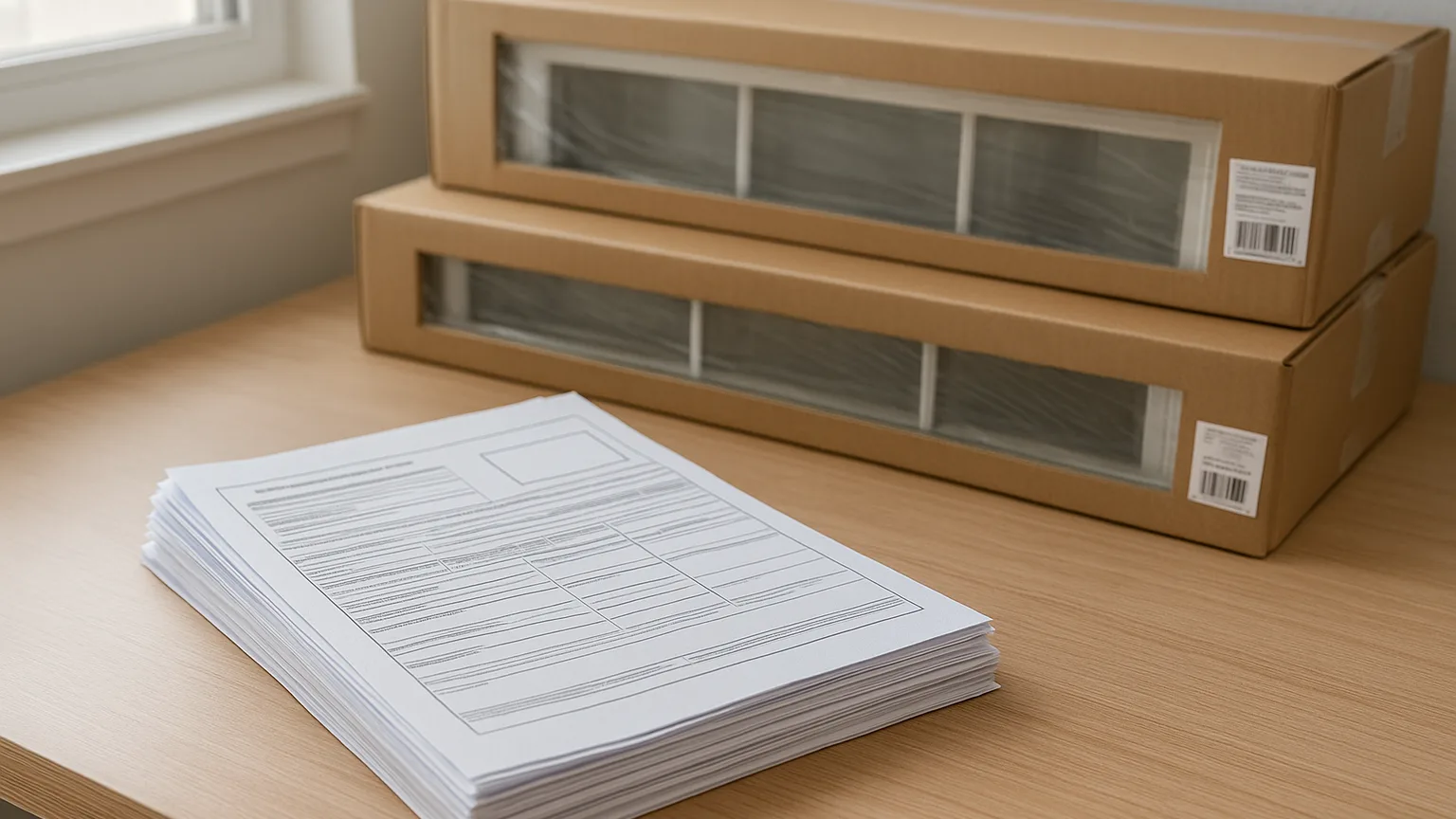
Every impact product approved for use here carries a Notice of Acceptance, usually called an NOA. That document is not a marketing badge. It is a legal permission slip that spells out the maximum size, the design pressure range, the anchor type, the spacing, and the substrate the unit was tested against.
Inspectors read it line by line. If your NOA allows a unit up to 74 inches wide and your opening is 78 inches, the product is wrong for that hole no matter how strong it looks. If the NOA calls for an anchor at six inches on center and the installer ran eight, the installation fails. The window is fine. The paperwork does not match the wall.
Where Approvals Go Sideways
- Expired or superseded NOAs. Approvals have expiration dates. A permit set built around an NOA that lapsed during a long design phase gets kicked back for resubmittal.
- Pressure mismatch. Design pressures change with building height, exposure, and location on the elevation. A product that works on a first floor window can be undersized on a seventh floor corner.
- Substitutions made late. When a fabricator goes on backorder, someone swaps in a similar product. Similar is not approved. That swap triggers a revision, and a revision goes back into the review queue.
Condo renovators carry an extra layer. Most associations require architectural review, a licensed contractor on file, proof of insurance, and sometimes a uniformity rule on frame color and glass tint. That approval happens before the permit, and the board may meet monthly. Owners doing older unit replacements run into the permit surprise lurking in older buildings when existing openings were never permitted correctly in the first place.
What A Delay Actually Costs You
A late window package does not sit quietly in a corner. It blocks the building from drying in, and dry-in is the gate everything else waits behind. Without windows set and inspected, you cannot pass the framing and envelope checkpoints that let interior work begin. Drywall will not hang. Insulation will not pass. The air conditioning cannot be commissioned in an open building, so the crew booked for Tuesday gets rescheduled, and rescheduled crews come back when their calendar opens, which in a busy Miami season might be three weeks later.
The Costs That Pile Up Quietly
- Trade stacking fees. Drywall, trim, flooring, and paint crews each charge for mobilizing twice.
- Extended loan carry. Construction financing keeps accruing while the shell sits open.
- Temporary protection. Plywood, shrink wrap, and watch service on an open building are real line items.
- Water intrusion repair. One afternoon storm in an unsealed building can mean replacing subfloor and framing.
- Insurance friction. Carriers want proof of impact-rated openings before they issue favorable terms, and a wind mitigation credit cannot be claimed on glass that is not installed and inspected.
Performance claims deserve the same scrutiny as the schedule, because two units that look alike on a quote can behave nothing alike once installed, as the comparison in windows one skyrocketing energy lays out plainly. Glass package and frame thermal break matter as much as the impact rating on a west-facing Miami wall.
<<
Working Backward From The Date You Want Keys
The only reliable way to plan a window order here is in reverse. Start at your target occupancy date and subtract every step. Most Miami projects need six to nine months of runway for the window package alone, and that number assumes nothing goes wrong.
- Ten to twelve months out. Lock the window schedule with the architect. Confirm sizes, operation types, and pressure zones. Pick products whose NOAs actually cover your largest openings.
- Nine months out. Condo owners submit to the association and get the architectural approval letter in writing before anything else moves.
- Eight months out. Submit for permit with current NOAs attached. Expect review comments and at least one round of corrections.
- Six months out. Field measure. Release the order to the fabricator only after the openings are verified, not off the drawings.
- Four to five months out. Production and glass fabrication. Delays here are invisible until they are not, so ask for a written ship date.
- Two months out. Delivery, staging, and installation. Schedule the inspection the same week the last unit goes in.
Buyers coordinating interior systems should sequence those decisions in the same breath, since miami condos now pre-wire for shade motors while the walls are still open and the glass order is being confirmed.
Questions To Ask Before You Sign Anything
- Which NOA number applies to each opening, and when does it expire?
- What is the design pressure for my tallest and most exposed unit?
- Is the quoted lead time from contract signing or from field measure release?
- Who files the permit and who handles revision responses?
- What happens to my schedule if one unit arrives damaged?
- Will the installer be on site for the inspection?
There is a deeper practical look at arizona the heat test for anyone weighing the options.
That last one matters more than it sounds. Inspections fail on anchor spacing and sealant details far more often than on glass. Having the person who installed the unit standing there with the NOA in hand turns a failed inspection into a corrected one.
The Window Order Nobody Regrets Placing Early
Impact windows in Miami sit at the intersection of three systems that all move at their own speed. The factory needs months to build custom laminated glass. The building department needs weeks to review a package that matches current approvals. Your trades need a dry, sealed shell before they can do a single hour of finish work. Miss the timing on the first and the other two fall over in sequence, which is how a window order turns into a four month occupancy delay and a stack of remobilization invoices nobody budgeted for.
The fix is not complicated, it is just early. Lock your window schedule while the plans are still being drawn. Verify that every NOA covers the opening it is assigned to, with room to spare on size and pressure. Submit for permit before storm season floods the queue, field measure before you release production, and track the ship date weekly as a hard commitment rather than a hopeful estimate. Do that, and the glass shows up ahead of the trades instead of behind them, the inspection passes the first time, and your insurance carrier gets its documentation without a single frantic phone call.