
Why Gate Safety Falls Between Two Trades
A gate can pass inspection and still hurt someone. Here is what UL 325 and ASTM F2200 really demand, and where builders and owners get caught.
Everything Hinges on the Gate: The Complete Series: part 3 of 4.
In the last part, we looked at how badge gates and headcounts tell you who is on site. This part turns to a quieter risk: the automated gate itself. It cycles thousands of times a year, and it has the strength to pin a car, or a child, against a post.
This series was shaped with insight from American Fence, whose field experience with gate builds and operator installs helped us map where compliance tends to slip. Their point is simple. Most gate failures don't come from one bad part. They come from a gap between people who each assumed someone else was handling safety.
Two Rulebooks, Two Crews, One Blind Spot
An automated gate is two products bolted together. The operator is the motor, controls, and sensors. The gate is the steel, rollers, and posts. UL 325 covers the operator. ASTM F2200 covers the gate's build.
The fence crew often builds the gate. An electrician or access control company installs the motor. The inspector may only check the electrical work. So a fully listed motor can hang on a frame that breaks every F2200 rule, and nobody notices until someone gets hurt. Each crew finishes its scope and leaves. The gap between those scopes belongs to no one, unless the builder makes it belong to someone.
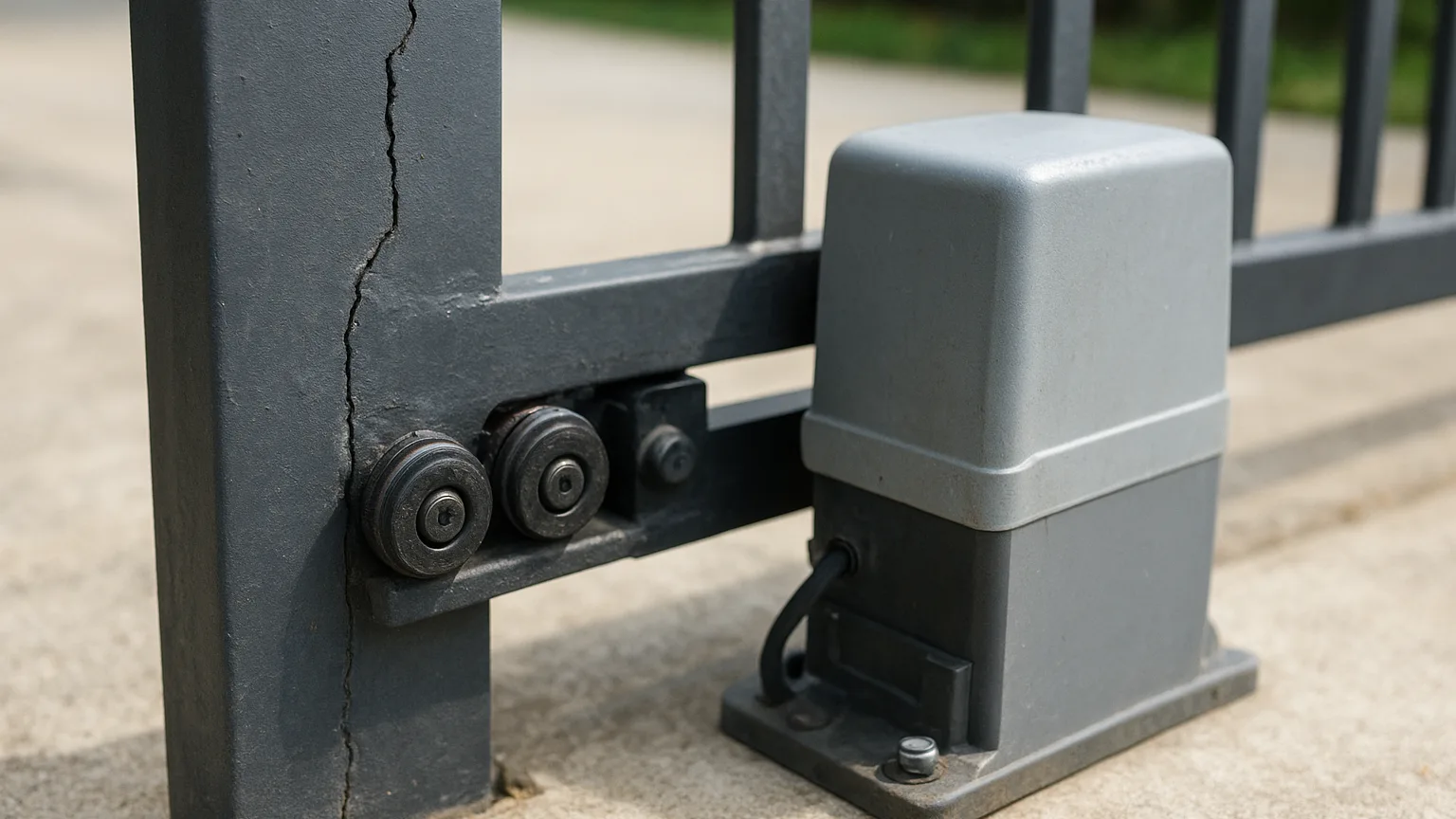
The Motor Side: What UL 325 Expects
UL 325 sorts gate operators into four classes based on who uses the gate. Getting the class wrong is the first shortcut people take, because cheaper residential units get installed on commercial sites.
- Class I: homes with one to four units.
- Class II: places the public uses, like condo garages, apartments, and hotels.
- Class III: industrial sites where only staff go in.
- Class IV: guarded, high security sites like prisons or airport lines.
The operator also needs two separate ways to stop a person from getting trapped in each direction the gate moves. In practice, that means monitored photo eyes, edge sensors, or both. If a sensor is unplugged or fails, a monitored system should refuse to run the gate normally. Lazy installs try to bypass exactly that feature with a jumper wire.
Push buttons should sit far enough from the gate that no one can reach through it while it moves, and warning signs belong on both sides. Since the operator runs on line power, give the wiring the care you would give any outdoor circuit, especially before rainy season soaks the conduit runs and control boxes.
The Steel Side: What ASTM F2200 Expects
F2200 governs the shape of the gate. Its job is to remove pinch points before a motor is ever attached. Key items include:
- Small openings on slide gates and nearby fence, so hands and arms can't slip through to the moving parts.
- Covered rollers so fingers stay clear.
- Positive stops so a slide gate can't roll past its track.
- Support that keeps the gate from tipping over if a roller fails.
- Swing gates that do not open out into public walkways or the street.
F2200 also pushes foot traffic to a separate pedestrian gate. That matches the thinking from tracking who is on site, where people and vehicles get their own lanes.
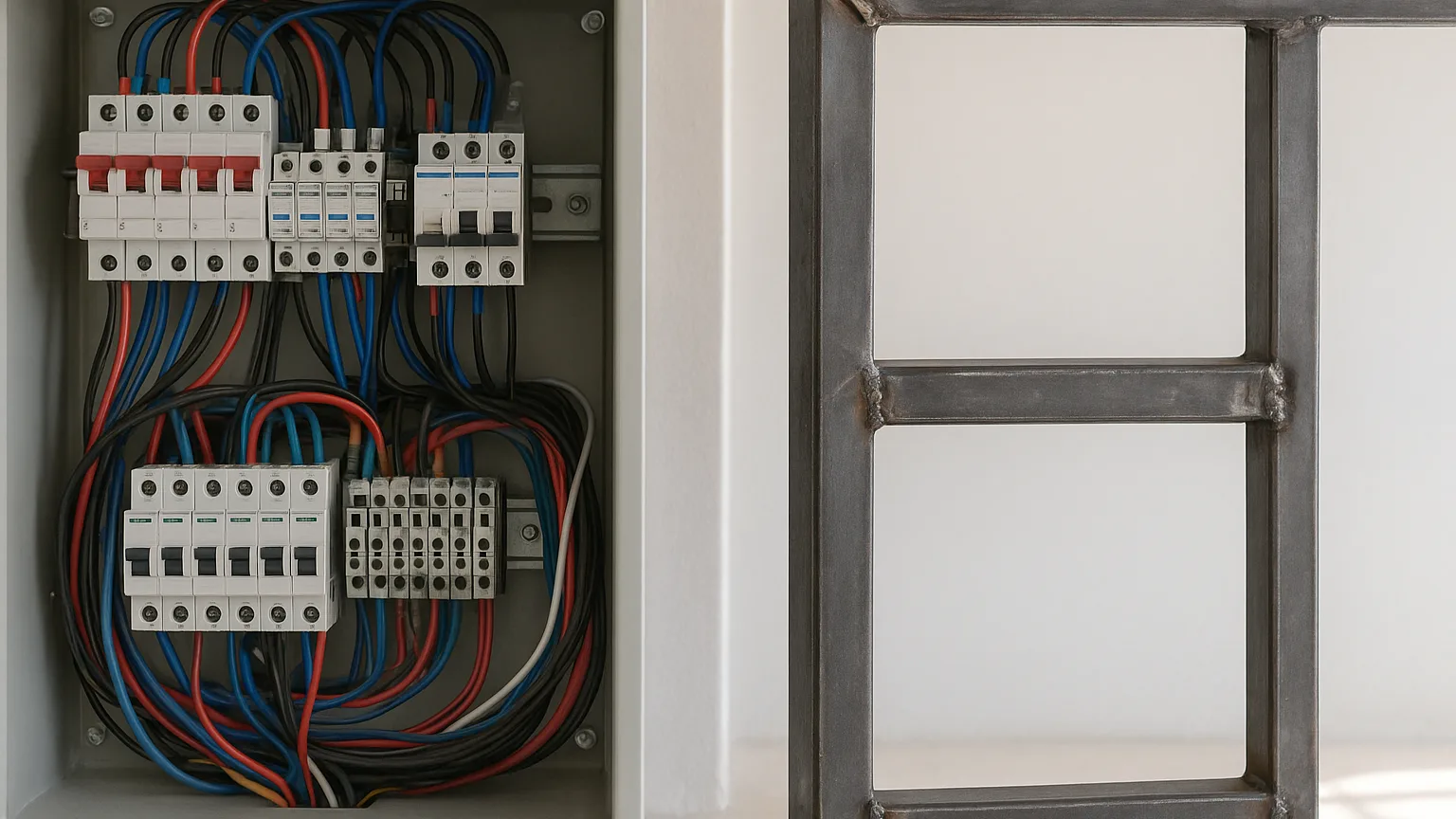
The Shortcuts That Show Up in Depositions
When a gate injury goes to court, lawyers look for the moment someone chose cheap over safe. Three shortcuts come up again and again.
The jumper wire. A sensor keeps tripping, so a tech bridges it out. Now the gate will close on anything in its path.
The wrong class. A Class I operator ends up on a 200 unit condo gate. It may run fine for a year, until a claim shows it was never rated for that use.
The retrofit. An old manual gate gets a new motor, but no one checks the steel against F2200. The motor is listed. The gate is not safe.
These are the same crushing and caught-in risks seen across a jobsite, where a cubic yard of soil weighs as much as a car. A gate panel weighing several hundred pounds deserves the same respect.
Who Ends Up Holding the Bill
Liability spreads. The builder may be named for the install. The owner or HOA may be named for keeping a gate in service after a sensor quit. The installer and maker may be pulled in too. Insurers dig into records, so missing paperwork can hurt almost as much as a missing sensor.
Companies that have stayed in the gate business for decades, including one with two decades of Arizona recognition, share one habit. They treat the gate and the operator as one system with one owner of the final check. American Fence's approach reflects that idea, and it is the fix for the gap.
A Quick Pre-Turnover Check
- Confirm the operator class matches the property type.
- Test every sensor, in both directions, with a real object.
- Check openings, roller covers, and stops against F2200.
- Make sure signs are posted on both sides.
- Keep install records, photos, and manuals in one file.
That file becomes the starting point for commissioning and owner training, which decides whether the gate stays safe once the crew is gone.
Close the Gap Before It Closes on Someone
An automated gate is safe only when UL 325 and ASTM F2200 meet in the middle. Trouble starts when separate crews each finish their half and nobody checks the whole. The fix is not costly. Name one person to own the final check, test every sensor with your own hands, and keep a clean paper trail. Builders who do this protect their name, and owners inherit a gate that does its job without risk. Next, we follow that gate past the ribbon cutting and into the years that prove whether the work held up.