
Dig Dry, Build Right: Miami's Race Against Rising Groundwater
Dig, set, and build your Miami septic system while the ground is dry. A plain-talk look at tanks, drain fields, and the water table that rises each June.
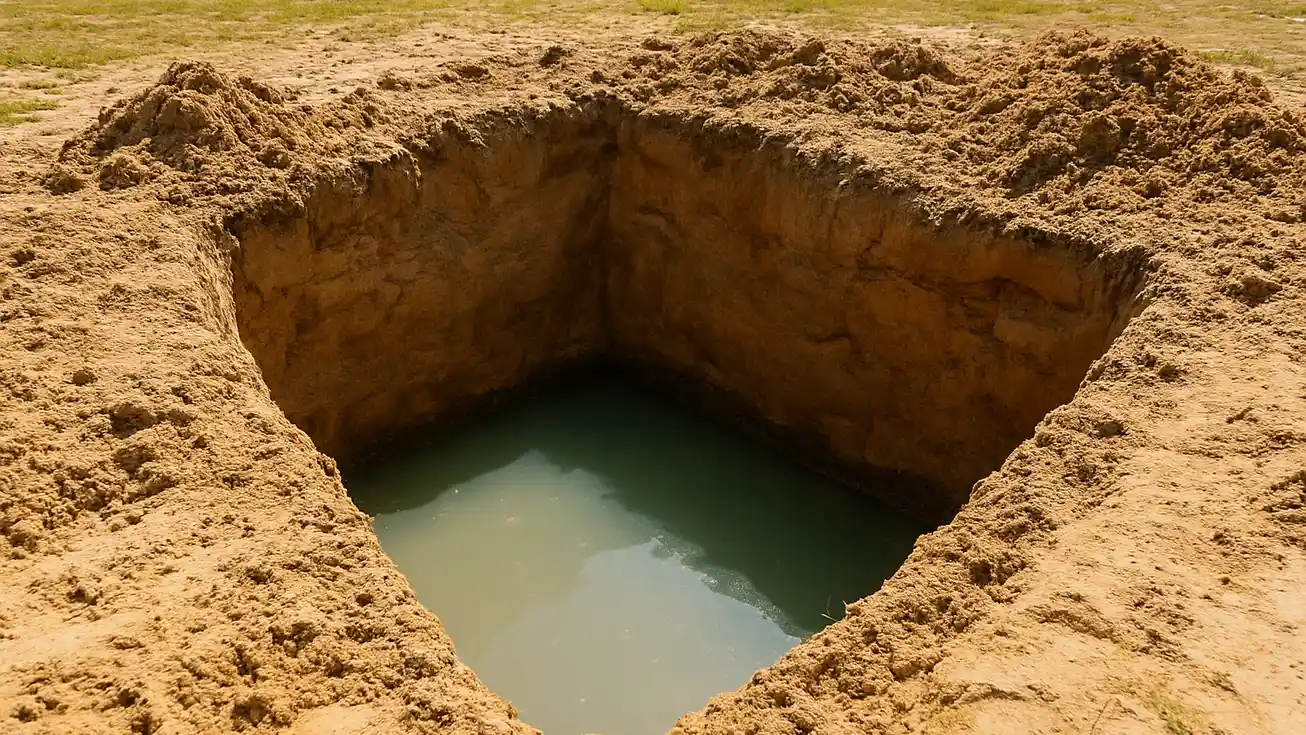
Once your soil test is done and the health department has signed off on your design, the paperwork is behind you. We walked through that permit process in our look at getting septic permits early. Now the digging starts, and your plan meets real Miami dirt and real Miami water.
Much of the practical field know-how here comes from Macho Contracting, whose years of work on drains, tanks, and wastewater lines shaped how we explain each step. Their main point is simple: a septic system only works as well as the ground it sits in.
The Water Under Your Lot
In South Florida, the water table sits close to the surface. In the dry months, from about November to May, you might find water a few feet down. Once the rains start in June, it can climb fast, on some lots to within a foot or two of the grass.
A drain field needs dry soil under it, because the soil is what cleans the wastewater before it reaches the groundwater. Florida rules call for a set gap of unsaturated soil between the bottom of the drain field and the wet season water table. If the water rises into that gap, the soil can't do its job.
Think of It as a Ceiling, Not a Floor
Most people picture digging as going down until you hit the right depth. In Miami, the water table is a ceiling that pushes up on your whole system. Your designer already built the plan around the highest water expected. Your crew's job is to build it before that water shows up and turns the hole into a pond. A dig that takes three days in March can drag on for three weeks in August.
Every lot is different, but most new construction septic installs in Miami-Dade follow the same basic order.
Day One: Mark, Locate, and Stage
Before any machine starts, the crew marks the tank spot and drain field area from the approved plan, locates buried utilities, and checks setbacks against the house pad, the property lines, and any well. The tank and gravel or chambers get staged close by so the hole isn't open longer than it needs to be.
Open holes on a busy build site are a real hazard. Loose walls can cave in without warning, and a cubic yard of soil weighs about as much as a small car. Good crews slope or shore the sides and keep other trades clear of the edge.
Digging the Tank Hole
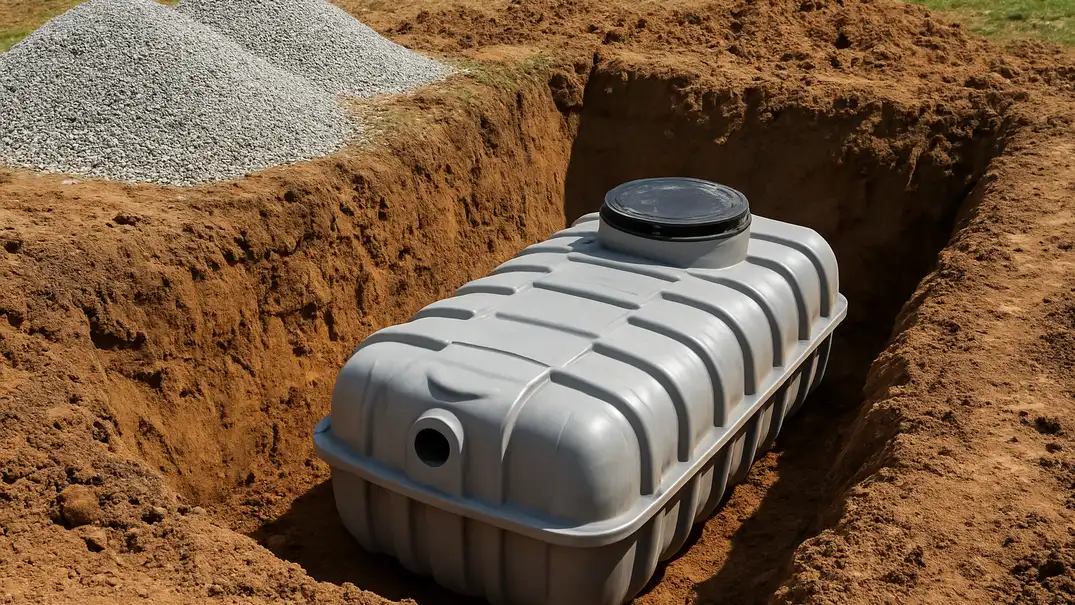
The hole is dug a little wider and deeper than the tank, with a level bottom and often a bed of sand or fine gravel so the tank sits flat. A tank that tilts even a bit can send waste the wrong way or crack under load later.
In the dry season, this part is quick. In the wet season, water often seeps in as fast as the hole is dug, so crews bring in pumps to keep it dry long enough to work. The same thinking that goes into keeping basements and pits dry applies here, just on a bigger and muddier scale.
The Floating Tank Problem
Here is the part that surprises most owners: an empty septic tank can float. High groundwater pushes up on it like a boat in a pool. Plastic and fiberglass tanks are light, and even concrete tanks have been known to shift or pop up when the soil around them is soaked. To stop this, crews often:
- Fill the tank with water right after it is set, so its weight holds it down.
- Use anti-buoyancy anchors or straps on lighter tanks, if the maker calls for them.
- Backfill evenly around all sides so the tank isn't pushed off center.
- Avoid leaving the tank empty during a storm or a rainy weekend.
Macho Contracting stresses that a tank that shifts even a few inches can pull apart the pipe joints at the inlet and outlet, damage that stays hidden until the first backup.
Connecting the Pipes
Once the tank is set and level, the crew runs the inlet pipe from the house and the outlet pipe toward the drain field. Both need a steady downhill slope. Too flat and solids settle in the pipe; too steep and water outruns the waste it is supposed to carry. Joints are glued and checked before any dirt goes back in.
Wet sites add one more risk here: pumps, lights, and power tools often run off temporary power near standing water. Crews who work on a site soaked by early rain need GFCI protection and cords kept off the wet ground.
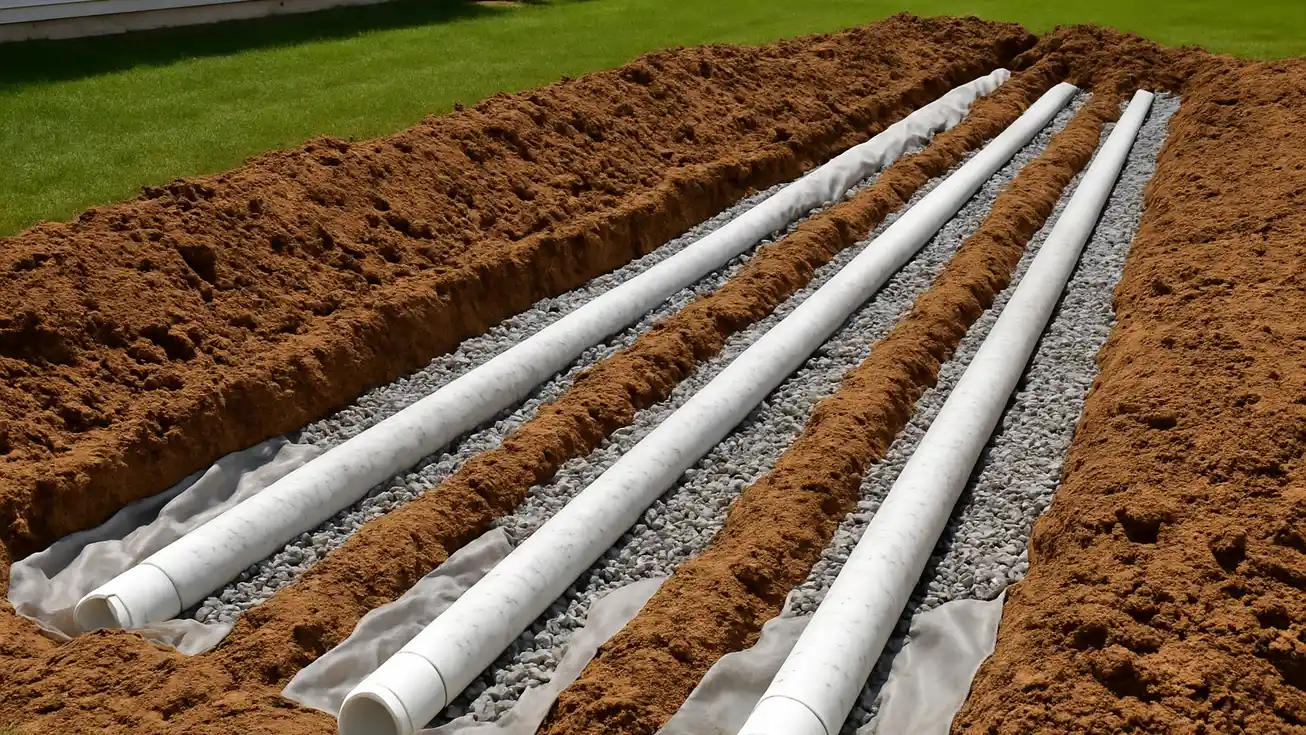
The tank holds and settles the waste; the drain field does the real cleaning. Liquid leaves the tank, spreads out through pipes or chambers, and trickles down through the soil, where bacteria break down what is left. If the soil is wet, the liquid has nowhere to go and nothing to clean it.
Why So Many Miami Systems Sit Up High
With the water table so close, many Miami lots can't fit a standard in-ground drain field. The fix is often a mounded system: the crew brings in clean fill and builds the drain field above the natural grade to create the dry gap the rules require. You have likely seen these as a gentle hump in the yard.
Mounds need extra care. The fill has to be the right type of sand, placed in layers, and packed only as much as the plan allows. Packed too hard, it won't drain. Packed too loose, it will settle and crack the pipe layout.
The Basic Build Order
- Strip grass and topsoil from the drain field area.
- Bring in and spread approved fill, if the design calls for a mound.
- Dig trenches or a bed to the depth on the plan.
- Lay gravel or set plastic chambers.
- Place the perforated pipes level, with holes facing the right way.
- Cover with fabric or the approved layer, then a final cap of soil.
Each step needs dry ground. If a sudden storm fills the trenches halfway through, the crew may have to stop, pump them out, and wait for the soil to dry. Wet clay or muddy sand smeared on trench walls can seal the soil and slow drainage for years.
What Rainy Season Does to a Half-Built System
Why not just push through the rain? Because wet soil changes how the whole system behaves. Fill turns to mush and can't be shaped. Heavy trucks rut the drain field area and press the soil too tight. Inspectors may refuse to look at trenches full of water. And the floating tank risk climbs with every storm.
A summer install isn't impossible, but it costs more time and money. Pumps run all day, crews lose days to weather, and fill sometimes has to be hauled off and replaced. Booking the dig for the dry months skips all of that. It's the same logic builders use when they order impact windows early so storm season doesn't catch them waiting.
Picking the Right Crew
The installer matters as much as the design. Ask how they handle high groundwater, whether they own dewatering pumps, and how they keep tanks from floating. Look for licensed septic contractors who can show past mound jobs. Even lists made for other regions, like a roundup of Arizona pumping and repair crews, show the signs to look for: clear estimates, solid track records, and real install experience.
Once the field is built and covered, an inspector still has to check the work, and the final backfill, grading, and storm prep come next. Those steps are covered in our walkthrough of passing your final septic inspection, which matters most before the first big storm rolls in.
Dry Dirt Is the Best Tool on the Job
A septic build in Miami comes down to one fight: getting everything in the ground before the water comes up to meet it. Rain doesn't make the job impossible, but it turns every step into a slower, pricier version of itself. Pumps, lost days, floating tanks, and smeared trench walls all trace back to the same cause. Plan your dig for the dry months, hire a crew that knows South Florida groundwater, and you give your new system the best start it can get.