
Get the Green Tag Before the First Storm Hits Miami
Your Miami septic is in the ground but not finished. See what inspectors check, how backfill closes the job, and storm prep that protects it.
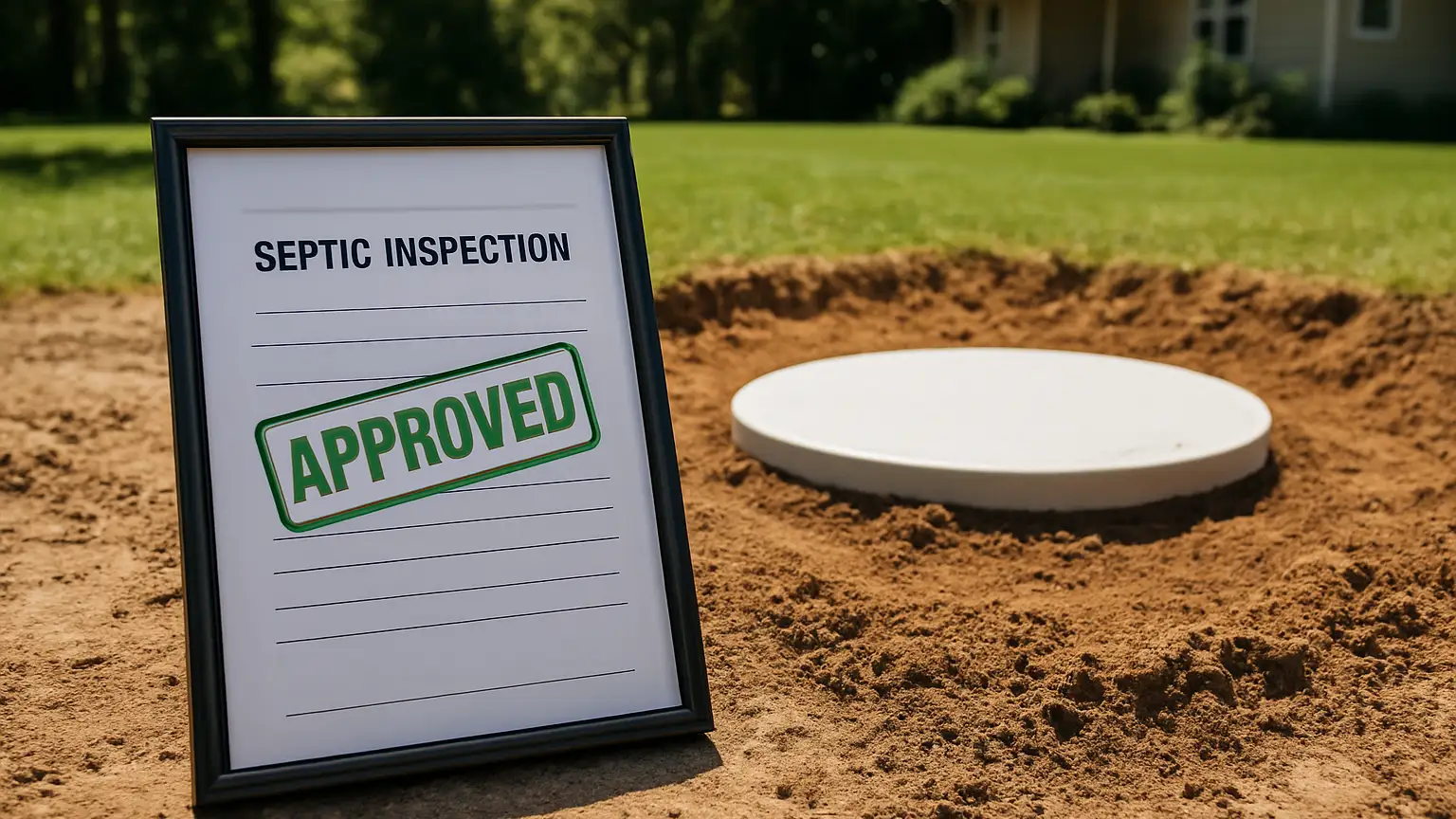
Once the tank is set and the trenches are built, the hardest digging is behind you. If you followed the steps for building the drain field during a dry stretch, you now have a system sitting in open ground. It still can't be used. It needs one more visit from the inspector, a careful backfill, and a final approval on file.
Much of the practical advice in these septic guides was shaped by the field experience of Macho Contracting, whose crews work on drains and septic lines long after the builders pack up. Their view is simple. Most problems that show up years later were baked in during the last few days of the build.
Timing matters here more than most owners expect. Hurricane season in South Florida runs from June 1 to November 30. An open trench or a half-covered tank in that window is a real risk. Heavy rain can wash out fill, flood the pit, and even push an empty tank up out of place. Your builder also can't get a certificate of occupancy until the septic system has its final approval. A late sign-off can hold up your whole move-in date.
So here is a helpful way to think about it. The final inspection is the dress rehearsal. The first big storm is opening night. If the system passes the inspector's eye and is set up to handle a soaked yard, it will be ready for both.
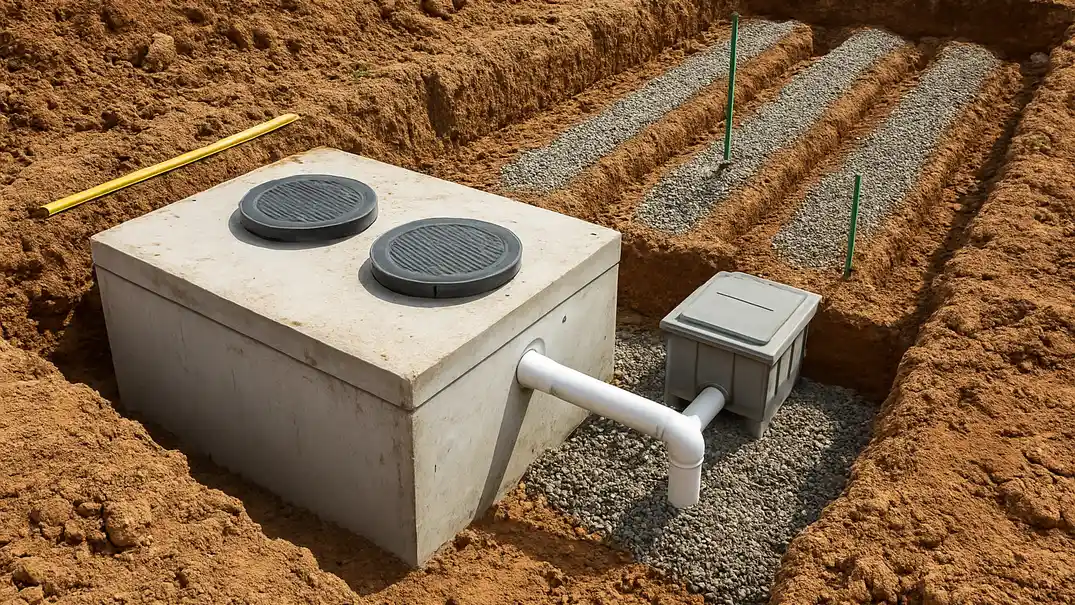
The final inspection happens before anything gets buried. The inspector from the county health office wants to see the system exactly as it was built, with the tank, pipes, and drain field still in view. They compare what is in the ground to the design that was approved when you were getting your septic permit. If the two don't match, you will hear about it.
What Gets Checked
Every inspector has a routine, but most walk through the same core items:
- Tank size and placement. The tank must match the approved size and sit level, at the right depth.
- Setback distances. The system must stay the required distance from wells, property lines, the house, and any canal or lake.
- Pipe slope. The line from the house to the tank needs a steady fall. Too flat and waste sits. Too steep and water runs ahead of the solids.
- Drain field elevation. In Miami, the bottom of the drain field must sit high enough above the wet season water table. That is why so many local systems are built up as mounds.
- Fill material. Any sand or fill brought in has to meet the design specs.
- Lids and risers. Access points must be easy to reach and properly sealed.
"Most failed inspections we hear about come down to small things, like a lid set too low or a pipe that drops too fast," says Daniel Reyes, field service manager at Macho Contracting. "Those are easy to fix with the trench open and a pain to fix once it's covered."
If It Doesn't Pass
A failed inspection is not the end of the world. The inspector will list what needs to change. Your contractor fixes it and schedules a new visit. The real cost is time. Each re-inspection can add days or weeks, and every week the pit sits open in late spring is a week closer to storm season.
Backfill That Holds Its Shape
Once the inspector gives the okay, the crew can cover the system. This step looks simple, but it decides how well the system holds up for the next twenty years. The goal is to bury everything without moving it, crushing it, or leaving soft spots that sink later.
Good crews place fill in layers rather than dumping it all at once. They keep heavy machines off the drain field and away from the tank walls. Soil is far heavier than it looks, and a cubic yard of soil can do real damage to pipes or to a worker standing in the wrong spot. Rocks, roots, and construction trash should never go back in the hole.
The finished surface should slope gently away from the tank and the field. Water that pools on top of a drain field is water the field will have to absorb later. A slight crown helps rain run off instead of soaking in.
The Paper Trail That Makes It Official
After backfill, the health office issues its final approval. Your builder sends this to the building department so the house can move toward its certificate of occupancy. Ask for your own copy. Also ask for the as-built drawing that shows where the tank, lids, and drain field sit on your lot. You will want it the first time the tank needs pumping, and anyone who buys the house from you will want it too.
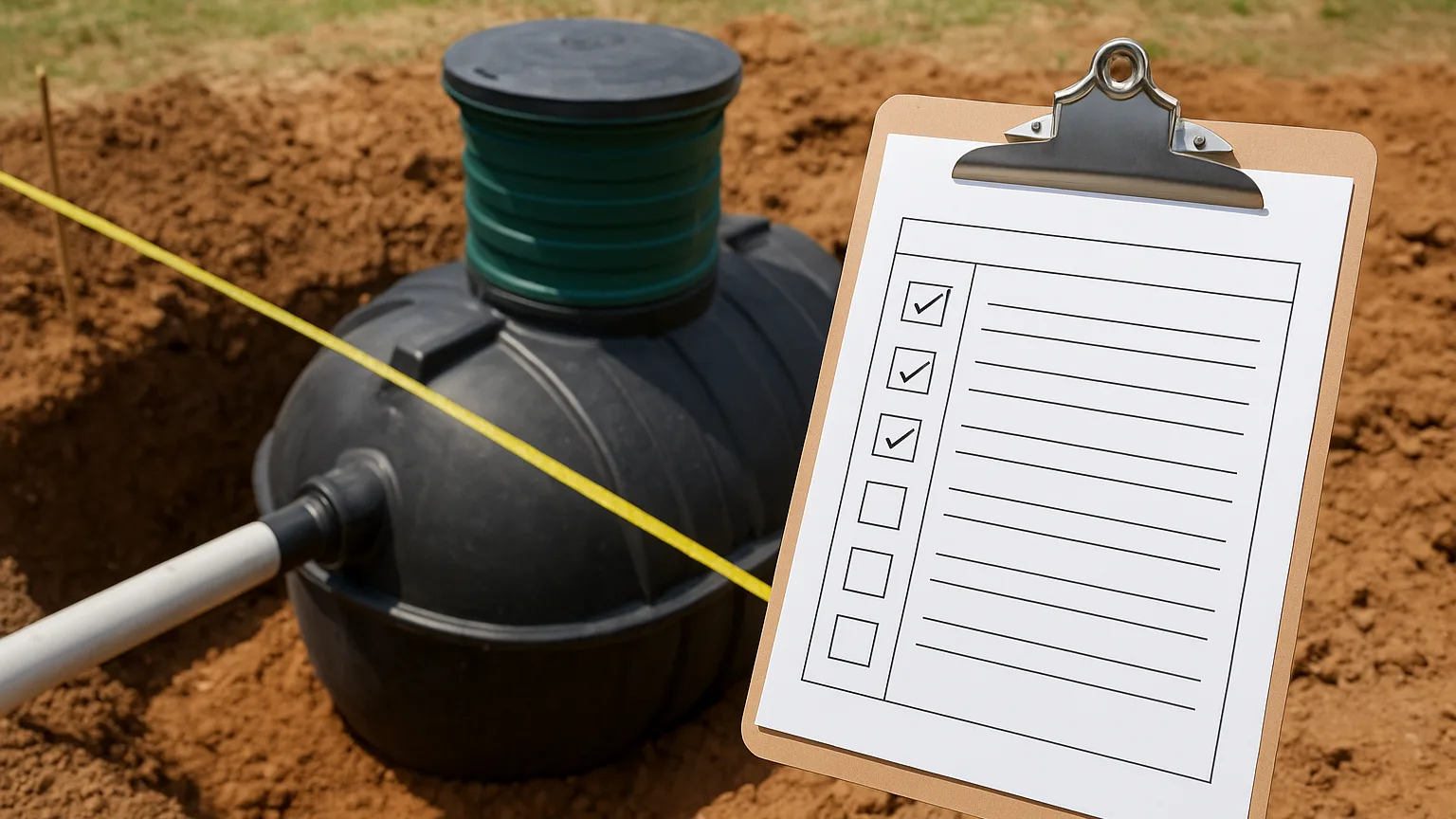
An approved system is a working system. It is not yet a storm-ready one. A new tank and a fresh mound of fill face their toughest test in the first rainy season, before grass has rooted and the soil has fully settled. A few steps now go a long way.
Your Pre-Season Checklist
- Get grass down fast. Sod or seed the drain field and mound right away. Bare fill washes out in heavy rain, and roots help hold it.
- Lock the lids. Make sure every riser lid is screwed down or latched. Floodwater and curious kids should never get in.
- Check the alarm. If your system has a pump, test the high-water alarm and make sure the control panel is sealed against rain.
- Plan your generator spot. Pick a place for a portable generator that is nowhere near the tank or drain field.
- Mark the field. Flag the drain field edges so storm cleanup crews and delivery trucks stay off it.
This is the same stretch of the year when owners rush to order impact windows and stock up on supplies. Add the septic system to that list. It sits underground, so it is easy to forget until the yard is flooded.
Why New Tanks Can Float
This one surprises people. A septic tank that is empty or nearly empty can be pushed up by a high water table, much like a boat. Miami's ground water rises fast during big storms. That is why you should never pump your tank when the ground is soaked or flooded. A full tank is heavy, and that weight helps keep it in place. If the yard is under water, wait until it drains before calling for service.
"An inspector who signs off before the rain starts is the cheapest insurance a new system will ever get," says Laura Bennett, project coordinator at AZ Bathroom Remodeling, whose team has written about what inspectors check before backfill in storm-prone areas. The lesson carries over well from desert monsoons to Florida hurricanes. Open trenches and big storms don't mix.
After the Storm Passes
When the weather clears, go easy on water use for a few days. A soaked drain field can't take in much more. Hold off on laundry, long showers, and the dishwasher until the yard dries out. Watch for slow drains, gurgling pipes, or soggy patches over the field. These are signs the system is struggling, and the drain experts at Macho Contracting often point out that catching them early keeps a small backup from turning into a big repair.
Make sure the septic papers, the as-built drawing, and the pump schedule are part of the closing packet. Builders often hand over keys and warranties but skip the details owners need later, a problem covered well in this look at the handover step builders skip. Your septic system deserves the same care at handover.
From Soil Test to Storm Ready
A new septic system in Miami takes shape in stages. It starts with soil tests and a permit, moves through digging and building the drain field, and ends with an inspector's sign-off and a careful backfill. Each stage depends on the one before it. The final inspection is your last chance to catch mistakes while everything is still in view, and the backfill decides whether the system stays level and sound for decades.
The smartest owners treat hurricane season as a deadline, not an afterthought. Get the approval before June, plant grass over the field, lock the lids, test the alarm, and never pump a flooded tank. Keep your papers close. With the right timing and a little storm prep, your new system will handle the wettest months South Florida can throw at it, and you can focus on enjoying the home you built.